
Govt has already approached World Bank seeking termination of contract. The progress of the project was just 20 per cent though the contract was awarded in 2016.

Steel, cement, aluminum, fertilisers, tractors, two-wheelers, beverages and carbonated drinks, tyres and FMCG could see demand back to near normal levels by the third or the fourth quarter of the financial year, or even earlier.

The Confederation of All India Traders has approached Union Home Minister Amit Shah, Union Health Minister Harsh Vardhan, Delhi Lieutenant Governor Anil Baijal, and Chief Minister Arvind Kejriwal, and urged them to shut markets in Delhi.

The demand for black oils and specialty products like fuel oil, bitumen, petcoke and sulphur has also shown marked improvement, facilitating increase of refineries throughput.

From fast food and athleisure to ACs, the demand for several non-discretionary items has spiked since May 17, when Lockdown 4.0 was extended till May 31.

From auto, refrigerator, and mobile handset makers to real estate firms, companies are tying up with banks to dole out attractive finance schemes and discounts to make buying more affordable.

In a circular dated May 20, Sebi had directed the listed companies to evaluate the impact of Covid-19 on their capital and financial resources, profitability, liquidity position, assets, and ability to service debt. Instead, companies have spoken about the number of plants, warehouses and distribution centres that have resumed operations; work-from-home and safety measures undertaken for employees; and the labour shortage they are facing.
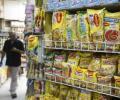
In 2019, the growth in sales of the Maggi brand of products surpassed the pre-ban level of 2014, in terms of both volume and value. While, Nestle raised prices of Maggi products by an average 3.1 per cent, its volume rose by 9.6 per cent year-on-year.

India's harsh lockdown has left companies grappling with temporary closure, chaotic supply chains and depressed demand. Consequently, business plans have been modified.

'While OTTs are a reality, big film producers will prefer a theatrical release before a digital one.'

Several on-site labourers in the city want to take special trains being run to transport workers back home. The rising number of COVID-19 cases in the city has caused anxiety among them.

Of the 171 Mumbai scribes tested on April 15, 53 tested positive on April 20. Of the 53 tested positive, 31 were treated and discharged on April 26. A large number of positive cases and later a quick recovery within less than a week have baffled many. Amritha Pillay reports.

RIL's debt stood at Rs 3.06 trillion as of December 2019, against Rs 2.87 trillion in March 2019.

With states in north India imposing stricter measures to curb intra-state movement after April 20, makers of summer products such as air conditioners, refrigerators, colas, and ice creams are estimating a 25-60 per cent drop in yearly sales.

Most listed corporate entities in the country are in a fix. With the sudden declaration in late March of a nationwide lockdown to tackle the Covid-19 pandemic, the final calculations of their financial results for the year 2019-20 (FY20) are hanging in limbo. Till April 19, only 41 of the 3,947 companies listed on the BSE have managed to finalise the dates for the declaration of their yearly financial results.

While FMCG companies were not barred from carrying out their operations during the 21-day lockdown, since most manufacture staples and essential products, capacity utilisation remained poor, owing to the restricted movement of raw materials, finished goods, and labour.
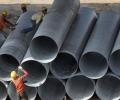
A bleak demand outlook for steel in the domestic as well as global market is also another reason Tata Steel may be looking to have additional liquidity as margins are expected to take a hit in the coming quarters.

Experts say the focus is on preserving liquidity as there is uncertainty over the duration and impact of the 21-day nationwide lockdown imposed to check the spread of COVID-19.

Top companies reported that despite most of them making staples and essential products, movement of raw material, goods and labour remained restricted, impacting sales.

According to sources, government officials have asked industry bodies and manufacturers to submit key concerns and requirements to begin manufacturing activity.
 © 2026 Rediff.com - Advertise with us - Disclaimer - Privacy Policy - Sitemap - Feedback - About us - Terms of use - Grievances